
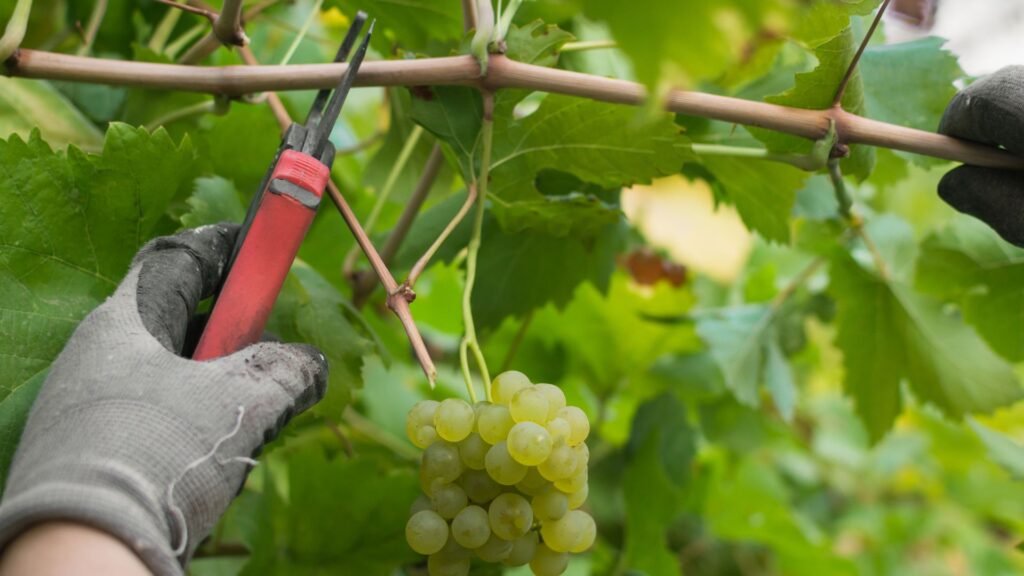
How to Prune Grape Vine: A Complete Guide to Timing and Technique
Grapevines are aggressive growers. Left untouched, they send energy into leaves and shoots instead of fruit. Pruning shifts that energy back to the buds and canes that carry clusters.
Grape growers who prune grape vines on schedule also protect vine health. Dense, overgrown canopies trap moisture and block airflow. That creates the perfect setup for fungal problems like powdery mildew. The Oregon State University Extension recommends removing about 90 percent of the previous season’s wood. That sounds extreme, but grapevines respond well to heavy cuts.
There is also a long-term benefit. Proper pruning extends a vine’s productive years. Consistent annual cuts prevent old wood from crowding new growth. A vine that receives regular care outperforms a neglected one every single season. Anyone learning how to prune grape vines should keep this long-term payoff in mind from the start.
When to Prune Grape Vines for the Best Results
Timing plays a major role in getting pruning right. Cutting too early risks frost damage to exposed buds. Cutting too late wastes the vine’s energy on growth that gets removed anyway.
Dormant Season Pruning
The best window for dormant pruning falls between late winter and early spring. In most climates, that means January through March. The vine has dropped its leaves, sap flow is minimal, and cuts heal more cleanly.
Dormant pruning is the main annual prune. This is when growers remove old wood and select the canes for next season’s fruit. A good practice is to wait until the coldest part of winter passes before starting. Most experts agree this is the single best time to prune grape vines for maximum fruit yield.
How to Prune Grape Vines During the Growing Season
Green pruning happens while the vine is actively growing. It is not the primary prune. Instead, it serves as a maintenance task. Growers remove extra shoots, thin crowded areas, and let more light into the canopy.
Removing lateral shoots that carry no fruit clusters is common during this phase. Better light exposure during fruit development leads to improved sugar content and flavor. Growers who know how to prune grape vines during dormancy can add green pruning as a follow-up.
How to Prune Grape Vines Using Two Main Methods
Two pruning systems dominate grape growing worldwide. Each method takes a different approach. The right choice depends on the vine variety and local climate.
Cane Pruning
Cane pruning selects one or two healthy canes from the prior season’s growth. Everything else gets cut back. The selected canes tie to a trellis wire and carry the buds that produce fruit.
The cane pruning process follows these steps:
- Identify the best canes with pencil-thick diameter and smooth bark.
- Cut selected canes to about 8 to 15 buds each.
- Remove all competing canes back to the trunk or a short renewal spur.
- Tie the remaining canes horizontally to the trellis wire.
Cane pruning works well for varieties that fruit best from basal buds. Varieties like Shine Muscat and Crimson often respond well to this approach.
Spur Pruning
Spur pruning keeps short stubs along a permanent cordon arm. Each stub, called a spur, holds two to three buds. Those buds produce shoots that carry fruit the following season.
The spur pruning process involves these steps:
- Establish a cordon by training a horizontal arm along a trellis wire.
- Select spurs spaced about 15 to 20 centimeters apart along the arm.
- Cut each spur back to two or three buds.
- Remove any crowded or weak spurs to prevent poor fruit quality.
Spur pruning is easier to manage overall. It works best for varieties that fruit reliably from low bud positions. The cordon system also simplifies trellising and harvest work. Many beginners who learn how to prune grape vines start with spur pruning for its simplicity.
Making the Right Pruning Cuts
The quality of each cut counts as much as choosing the right branches. Poor cuts leave stubs that rot or invite disease.
Tools and Technique
Sharp, clean tools are not optional. A dull blade crushes tissue instead of cutting it. That damage slows healing and opens the vine to infection.
Here are the basic tool recommendations:
- Use bypass pruners for canes up to 1.5 centimeters thick.
- Switch to loppers or a pruning saw for thicker wood.
- Disinfect blades between vines with a solution of one part bleach to nine parts water.
How to Prune Grape Vines at the Right Spot
Each cut should land just above a bud node. Leave about 5 to 10 millimeters of wood above the bud. Cutting too close damages the bud itself. Leaving too much stub creates dead wood that can harbor fungal spores.
A slight angle on the cut helps water run off the surface. That small detail prevents moisture from pooling around the bud and causing rot.
Anyone who prunes grape vines across multiple plants in one session should clean blades between each vine. This simple habit stops disease from spreading. Anyone learning how to prune grape vines should build this into every session. Keeping a bucket of diluted bleach nearby makes the process quick.
How to Prune Grape Vines in Tropical Climates
Most pruning guides focus on temperate regions. Growing grapes in the Philippines, where warmth lasts year-round, calls for a different approach to timing.
In tropical conditions, vines do not enter full dormancy naturally. Growers manage this by withholding water for a set period or by removing leaves manually. This forced stress period mimics dormancy and signals the vine to rest before pushing new growth.
After this rest period, the same pruning principles apply. Remove old wood. Select the best canes or renew spurs. Shape the canopy for light and airflow. The cuts stay the same. Only the timing shifts based on the local growing cycle. Warm-region growers still need to prune grape vines with the same care used in cooler areas.
Certain varieties handle tropical conditions better than others. The Vineyard Patio grows varieties suited to these conditions. Yulian, Hope, Radiant, and Baikonur all perform well in warm tropical settings. Seeing how growers prune grape vines in a real tropical vineyard adds practical insight. The techniques apply to backyard growers and small vineyards alike. A working vineyard like this one offers real lessons for warm-climate grape care.
Training and Shaping for Stronger Yield
Good vine shape starts from year one. The two most common training systems are vertical shoot positioning and the overhead pergola system.
Vertical shoot positioning trains shoots upward between trellis wires. It keeps the canopy organized and promotes airflow. The system makes spraying and harvesting easier.
The pergola system, common across many Asian vineyards, trains vines horizontally overhead. Fruit hangs downward from the canopy. This setup suits high-vigor varieties well. Visitors to The Vineyard Patio’s grape-picking adventure walk under this type of canopy. They pick fruit directly from trained vines.
Regardless of the system, the goal remains the same. Create a permanent framework that supports new fruiting wood each season. Balanced pruning, where bud count matches vine vigor, keeps production steady year after year. A strong training system makes it easier to prune grape vines each dormant period.
See Pruned Vines at The Vineyard Patio
Learning how to prune grape vines gets easier with a real example. At The Vineyard Patio in Matnog, Sorsogon, the vineyard demonstrates what consistent annual pruning produces. Each vine holds a clear structure with organized canes and open canopy.
The grape-picking experience costs around PHP 300 per kilo during peak season. Off-season entry is about PHP 50. After walking the vineyard, guests can enjoy a meal at the open-air gazebo. The dine-in restaurant features local seafood, grilled dishes, and seasonal ingredients. The venue also hosts weddings, birthdays, and celebrations at the events place.
The vineyard sits at Purok 5, Brgy. Laboy, Matnog, Sorsogon 4708. It is about a 10-minute drive from Irosin and 30 minutes from Bulan. Matnog Port is also about 30 minutes away. Doors open at 11 AM Monday through Saturday and 1 PM on Sundays. Early access is available for guests with reservations. The drive is worth it for a one-of-a-kind vineyard experience in the 2nd district of Sorsogon.
Final Takeaway on Vine Pruning
Knowing how to prune grape vines properly takes patience and practice over multiple seasons. The basics stay the same every time. Prune during dormancy, use sharp clean tools, and cut just above healthy buds. Match the method to the variety. Each season of careful work builds on the last. Over time, the vine develops a strong framework and delivers consistent fruit quality.
Anyone curious about grape vine care can visit The Vineyard Patio in Matnog for a living example. Check out the grape varieties grown on-site and plan a visit to see the results firsthand.