
How to Trellis Grape Vine: A Complete Setup and Training Guide
Learning how to trellis grape vine properly sets the foundation for a productive growing season. A solid trellis holds vines in place and controls canopy shape. It also improves fruit quality from the first harvest onward. Without the right support, vines tangle and shade their own fruit. This guide covers trellis types, materials, wire setup, and vine training.
Why a Grape Vine Trellis Setup Affects Growth and Yield
A trellis does more than keep vines off the ground. It determines how light reaches the leaves and how air moves through the canopy. Both factors affect fruit ripeness, disease pressure, and overall vine health.
Grapes are natural climbers. They send out tendrils and grab onto anything nearby. Without structure, shoots grow in every direction. A trellis channels that energy into organized growth. The vine puts resources into fruit instead of wasted vegetative sprawl.
Proper trellising also makes pruning and harvest easier. A well-trained vine on a solid trellis lets the grower reach every cluster. Growers spend less time fighting the plant and more time managing it.
Airflow and Sunlight Control
Good vine support keeps leaves spaced apart. Open canopies let morning dew dry faster. This reduces the risk of fungal diseases like downy mildew and powdery mildew.
Sunlight exposure also boosts sugar content in the fruit. Clusters hidden under thick leaf cover ripen unevenly. A trellis that spreads the canopy gives each cluster direct or filtered light during the day.
Long-Term Vine Health
Vines trained on a trellis develop stronger trunks over time. The support reduces wind damage and keeps fruiting wood positioned correctly. Consistent training year after year builds a vine framework that improves with age.
How to Trellis Grape Vine: Choosing the Right System
Several trellis systems exist, and each one works differently. Knowing how to trellis grape vine starts with picking the right design. The best choice depends on the variety, climate, and space available.
Vertical Shoot Positioning (VSP)
VSP is the most widely used system for small and midsize vineyards. The vine trunk grows upward, and two cordons extend along a horizontal wire. New shoots grow vertically and get tucked between catch wires above.
This system works well for varieties with upright growth habits. It keeps the canopy open and makes pruning straightforward. Oregon State Extension recommends VSP for low to moderate vigor vines. It performs well in both warm and cool climates.
Geneva Double Curtain (GDC)
GDC uses two parallel cordon wires at the top of tall posts. The cordons run along each wire, and shoots hang downward like curtains. This design suits high-vigor varieties that produce heavy vegetative growth.
The hanging shoot position naturally limits excessive growth. GDC trellises need wider row spacing to let light reach both curtain sides. Rows typically sit 10 to 12 feet apart.
Overhead or Pergola Trellis
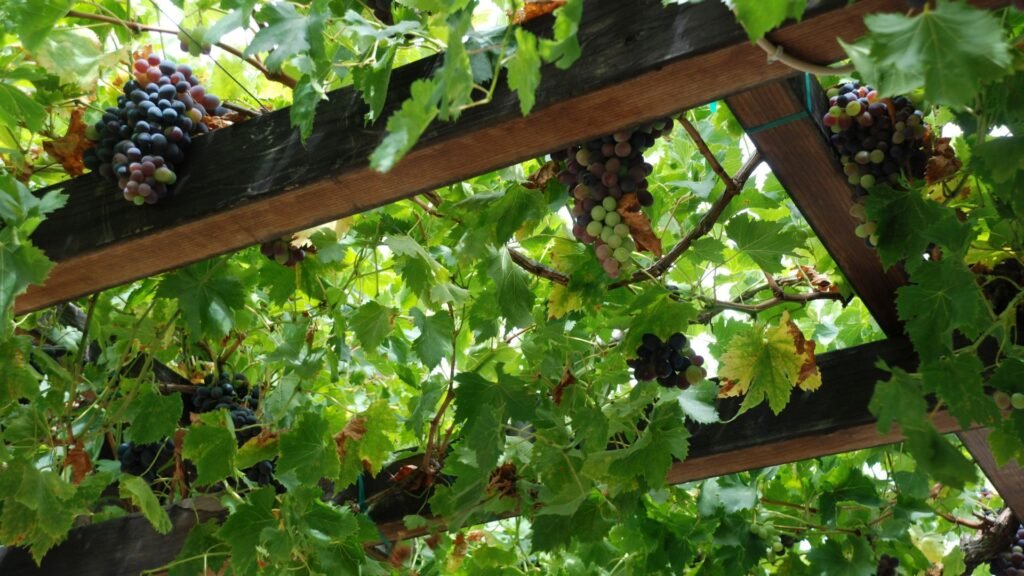
In tropical and subtropical climates, overhead trellises are common. The vine grows upward, and fruiting canes spread across a horizontal frame. This lifts fruit off the ground and improves air circulation underneath.
The Vineyard Patio in Matnog, Sorsogon runs an 800 sqm vineyard. The site shows how to trellis grape vine in a warm, humid climate. Varieties like Shine Muscat, Crimson, and Radiant grow well in this environment. Visitors can see these trellis systems firsthand during the grape-picking adventure.
Scott Henry System
The Scott Henry system splits the fruiting zone into two levels. Some canes train upward, and others train downward. It doubles the fruiting surface area without widening row spacing.
This works best for productive varieties that need room for fruit development. The split canopy improves light distribution across a larger fruiting zone.
Materials and Posts for Grape Vine Trellis Construction
The physical structure carries the entire vine load for years. Material choices made early affect maintenance costs and trellis lifespan.
Posts are the backbone. For a lasting vineyard, use treated timber, steel T-posts, or concrete posts. Here is a quick comparison:
- Treated timber is affordable and easy to work with. Expect 10 to 15 years of service life.
- Steel T-posts resist rot and last decades. They cost more upfront but need less replacement.
- Concrete posts handle heavy loads and resist all decay. They work well for permanent installations.
End posts carry the heaviest stress. They anchor all wire tension and need extra depth and bracing. A diagonal brace post or a concrete footer at each row end adds stability.
Line post spacing typically falls between 10 and 20 feet. Most small vineyards use 15-foot spacing as a good balance between cost and support.
How to Trellis Grape Vine: Post Height and Depth
Post height depends on the trellis type. For VSP, the top wire usually sits at 5 to 6 feet. For overhead systems, posts may reach 7 feet or more above ground level.
Set posts at least 2 feet into the soil. In sandy or loose ground, go deeper. End posts in soft soil may need 3 feet of depth. A concrete collar helps them hold steady under tension.
Wire Selection and Tension for Grape Vine Support
Wire is the contact point where the vine grows and grabs hold. A big part of how to trellis grape vine well comes down to wire gauge and tension. Both keep everything aligned season after season.
Picking the Right Wire Gauge
Most vineyards use 12 to 14 gauge galvanized wire for the main cordon wire. This heavier gauge holds tension and supports mature vine weight without sagging.
Catch wires can use lighter 14 to 16 gauge wire. They carry less load since they only guide growing shoots into position. Always use galvanized or coated wire. Bare steel rusts fast in humid climates and weakens in just a few seasons.
How to Trellis Grape Vine with Proper Wire Tension
Loose wire lets vines droop and tangle together. Too much tension bows posts inward over time. The sweet spot sits right between those two extremes.
Use a fence tensioner or wire strainer tool. Tighten until the wire feels firm but gives slightly under pressure. A quick test is to flick the wire. It should vibrate with a low hum, not bounce loosely.
Check tension at the start of each growing season. Temperature changes cause wire to expand and contract. End post connections take the most stress, so inspect them regularly.
Wire Height Positioning
For VSP trellises, the cordon wire sits around 30 to 40 inches from the ground. Catch wires go above it at 8 to 12 inch intervals. For overhead systems, space horizontal wires 12 to 18 inches apart across the top frame.
How to Trellis Grape Vine: Training Young Vines
Building the trellis is only half the work. Learning how to trellis grape vine also means training it onto the structure. This takes patience over two to three years.
Year One: Building the Trunk
In the first growing season, focus entirely on a strong, straight trunk. Tie the main shoot to a stake near the vine. Remove all other shoots. Let the vine channel its energy into root and trunk development.
Do not let the vine fruit in year one. Early fruiting pulls resources away from structural growth. A vine with a thick trunk and deep roots produces far better fruit starting in year three.
Year Two: Developing the Cordons
Once the trunk reaches the cordon wire, pinch the top. Let two lateral shoots grow along the wire in opposite directions. These become the permanent cordons.
Tie them loosely and let them extend the full trellis length. Remove shoots growing downward or inward. Keep lateral spacing even so fruiting spurs develop at regular intervals along each arm.
Year Three: Spur Pruning Begins
By year three, the cordon has matured enough for fruiting spurs. Each spur is a short section of the previous cane cut back to two to four buds. New shoots grow from these buds each spring.
This cycle repeats every season. Prune each winter, allow new growth in spring, and harvest the following season. The trellis keeps everything organized and within reach.
Grape Vine Trellis in Tropical Conditions
Tropical climates add specific challenges. Growers who want to know how to trellis grape vine in humid, warm conditions face extra considerations. Heavy rainfall and year-round heat change what vines need from their support.
Overhead trellis designs perform well in tropical settings. They keep the fruiting zone raised and away from ground moisture. Good airflow through the canopy reduces fungal pressure, a real concern in humid conditions.
The Vineyard Patio in Barangay Laboy, Matnog, Sorsogon grows several varieties suited to this climate. Yulian, Hope, Baikonur, and Everest all thrive in this vineyard environment. The grape-picking experience connects visitors directly with the vines in a working vineyard setting.
The vineyard spans 800 sqm and gives guests a close look at how trellising works in practice. Guests walk through the rows and see the wires up close. Observing canopy management firsthand makes grape growing easier to absorb. It is a full experience that goes beyond reading a guide.
Trellis Maintenance Tips for Every Season
Knowing how to trellis grape vine is only the first step. A trellis built well in year one still needs regular upkeep. Here are the steps to keep it performing long term:
- Check wire tension before each growing season. Temperature changes loosen wire over time.
- Replace damaged or leaning posts before they transfer stress to neighboring posts and wires.
- Retie loose vines promptly. Untied canes whip in the wind and damage nearby shoots.
- Clear old ties and debris from wire connections. Trapped moisture speeds up rust.
- Inspect end posts and anchors after heavy rains. Saturated soil reduces holding power.
A few minutes of seasonal maintenance prevents expensive repairs later. The trellis protects the vine investment, so it pays to keep it sound.
See How to Trellis Grape Vine at a Working Vineyard
Reading about trellising is helpful. Seeing it in action adds a practical layer no guide covers. The Vineyard Patio in Matnog, Sorsogon offers exactly that opportunity. It is the first grape-picking destination in Sorsogon. The vineyard layout reflects real decisions about how to trellis grape vine for the local climate.
Guests walk through the rows during the grape-picking adventure and see multiple varieties at different growth stages. Entry is approximately 50 pesos off-season or 300 pesos per kilo for pick-and-pay during harvest. Pre-booked guests can arrange earlier access before the usual 11 AM opening.
After time in the vineyard, the dine-in restaurant serves meals in an open-air gazebo overlooking the vines. The menu features local seafood, grilled dishes, and seasonal ingredients. The events space also hosts celebrations in the same scenic setting.
The Vineyard Patio sits in Barangay Laboy, the first barangay in Matnog. It is about a 10-minute drive from Irosin, 30 minutes from Bulan, and 45 minutes from Sta. Magdalena or Bulusan. The drive is worth it for a one-of-a-kind vineyard experience in the 2nd district of Sorsogon.
Knowing how to trellis grape vine correctly pays off in every season that follows. Pick a system that fits the variety and climate. Set posts and wire with care. Train the vine consistently over its first few years. Fruit quality and vineyard management both reflect the trellis decisions made at the start.