
How to Grow Grapes in Tropical Climate: Complete Guide
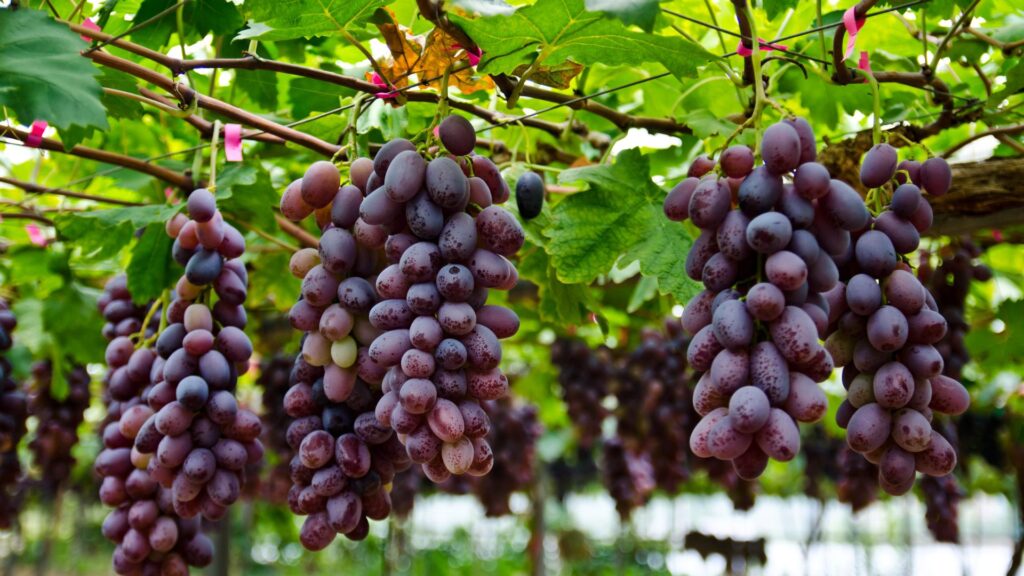
Learning how to grow grapes in tropical climate conditions is more possible than most people think. Grapes have a long history as a temperate crop, so tropical growers tend to assume they can’t pull it off. But places like The Vineyard Patio in Barangay Laboy, Matnog, Sorsogon prove otherwise. Right here in the Philippines, an 800-square-meter vineyard grows multiple grape varieties successfully, year-round, in a region that gets heavy rainfall and high humidity. So yes, it can be done. The conditions just require a different kind of attention.
This guide focuses on the three things that trip up most tropical grape growers: rainy season care, humidity control, and disease prevention. Get these right, and the rest becomes manageable.
Why Tropical Grape Growing Is Different
Most grape-growing guides are written with Mediterranean climates in mind: dry summers, cold winters, low humidity. Tropical growing flips that completely. You’re working with high year-round temperatures, irregular rainfall, and humidity levels that stay elevated even during the dry season.
These differences affect every stage of grape production, from how you train your vines to how often you spray and prune.
The Role of Temperature and Photoperiod
Grapes need a rest period to fruit. In temperate climates, cold winters force the plant to become dormant. In the tropics, you trigger dormancy through a different method: controlled defoliation.
This means manually stripping the leaves off your vines at a set time to simulate the end of a growing season. After about two to four weeks, new buds push out. The grape plant responds to leaf removal as a dormancy signal, then re-enters a fruiting cycle. Timing this defoliation correctly, usually once or twice per year, is what makes tropical grape farming productive.
Choosing Varieties That Work in Humid Conditions
Variety selection matters more in the tropics than anywhere else. Disease-resistant varieties adapted to humid, warm conditions outperform traditional wine grapes by a wide margin.
At The Vineyard Patio, several varieties thrive in Sorsogon’s climate. These include the Baikonur, known for its large clusters and early ripening; the Brazilian Hybrid, which was specifically developed for warm and wet conditions; the Radiant, a seedless table grape with good humidity tolerance; and the Shine Muscat, a popular premium variety that adapts well with proper care. Other varieties like Hope, Flora, Yulian, and Everest also grow there, each with their own fruiting characteristics.
Choosing varieties with documented success in Southeast Asia or subtropical regions cuts your learning curve significantly.
How to Grow Grapes in Tropical Climate: Rainy Season Care
The rainy season is the most challenging period for tropical grape growers. Waterlogged soil, reduced sunlight, and sustained humidity create conditions where disease spreads fast. Getting your rainy season management right protects months of work.
Drainage and Raised Planting Beds
Standing water around grape roots causes rot. Before planting, assess your soil drainage honestly. Clay-heavy soils hold water too long and need to be amended or avoided.
Raised beds or mounded rows are common solutions in tropical vineyards. Raising the root zone even 20 to 30 centimeters above the natural ground level improves drainage significantly. Adding organic matter like rice hull compost or coconut coir to your soil mix also opens up the soil structure.
Avoid areas where water naturally collects after heavy rain. Even if the location looks fine during dry months, it can become waterlogged for days during a typhoon season, and grapes cannot recover quickly from root flooding.
Canopy Management During Wet Months
Dense canopy is one of the biggest problems during rainy periods. Leaves and clusters packed tightly together stay wet, trap humidity, and give fungal spores exactly the environment they need to germinate.
Thin your canopy aggressively before and during the rainy season. Here’s what that looks like in practice:
- Remove any lateral shoots crowding the fruiting zone
- Strip leaves from around clusters to improve air circulation
- Keep the main cane spacing open so sunlight and wind can move through
- Avoid nitrogen-heavy fertilizers during wet months, since excess nitrogen pushes leafy growth that worsens the problem
Pruning also removes wood that may already carry dormant disease spores. Clean cuts and consistent removal of old, cracked wood reduce the reservoir of infection.
Trellis Systems for Tropical Conditions
The trellis system you use affects airflow and disease pressure. The overhead pergola or “T-bar” style trellis is common in Southeast Asian vineyards because it positions the canopy above the grower’s head. This allows better airflow around the entire plant compared to vertical systems.
The downside of overhead systems is that water can pool on horizontal surfaces. Angling your trellis wires slightly, using smooth galvanized wire that sheds water, and avoiding hollow tubing that holds moisture all help maintain drier conditions across the structure.
Humidity Control for Healthy Vines
High humidity is the underlying cause of most disease problems in tropical grape production. You cannot change the weather, but you can manage the microclimate around your vines.
Spacing and Plant Density
Plant density directly affects humidity levels at the canopy level. Wide spacing between rows and between plants allows more air to move through the vineyard. A common recommendation for tropical settings is to maintain at least 2.5 to 3 meters between rows and 1.5 to 2 meters between plants within a row.
Wider spacing means fewer plants per area, but healthier individual plants. Crowded vines in humid climates rarely outperform properly spaced ones, even when the total plant count is higher.
Irrigation Timing
In the tropics, you’re often managing too much water rather than too little. When you do need to irrigate during dry spells, water early in the morning. Morning irrigation gives foliage time to dry out during the day. Evening watering keeps leaves wet through the night, a direct invitation for fungal infections.
Drip irrigation is preferable to overhead sprinklers in humid climates. Drip systems deliver water directly to the root zone, keeping leaves dry. They also use less water overall, which matters in areas where overwatering is already a risk.
Mulching the Root Zone
A 5 to 8 centimeter layer of organic mulch around the base of your vines serves multiple purposes in a tropical vineyard. It reduces soil splash, which is a major transmission route for soil-borne pathogens during heavy rain. It also moderates soil temperature and conserves moisture during dry spells.
Use mulch materials that break down slowly, like dried grass, wood chips, or rice straw. Avoid mulches that compact and hold excess moisture directly against the trunk.
Disease Prevention in Tropical Grape Growing
Disease management is where tropical growers spend most of their energy. Downy mildew, powdery mildew, anthracnose, and botrytis are the four most common problems. Each one has distinct conditions it thrives in, and a prevention calendar beats reactive treatment almost every time.
The Four Key Diseases to Monitor
Understanding what you’re preventing helps you apply the right controls at the right time.
- Downy mildew (Plasmopara viticola): Produces oily yellow spots on leaf surfaces and white fuzzy growth on the underside. Spreads rapidly in wet conditions above 20°C. Spreads through water splash.
- Powdery mildew (Erysiphe necator): White powdery coating on leaves, shoots, and berries. Unlike downy mildew, it spreads best in dry conditions with high humidity and moderate temperatures around 25°C.
- Anthracnose (Elsinoe ampelina): Circular dark lesions on leaves, shoots, and fruit. Severe in warm, rainy weather. Common in tropical Asia.
- Botrytis bunch rot (Botrytis cinerea): Gray fuzzy mold that destroys grape clusters from the inside out. Worst during fruit set and at harvest when berries crack.
Building a Spray Program
A consistent spray schedule prevents infection better than spraying after you see symptoms. Once disease is visible on leaves or fruit, the infection has already progressed and treatment becomes damage control rather than prevention.
A basic tropical spray program looks like this:
- Bordeaux mixture or copper-based fungicides: Apply every 10 to 14 days during wet weather as a broad-spectrum preventive, especially for downy mildew and anthracnose.
- Sulfur-based fungicides: Effective against powdery mildew; apply during drier periods. Avoid applying sulfur when temperatures exceed 35°C as it can burn foliage.
- Systemic fungicides: Rotate with contact fungicides to prevent resistance. Use products registered for grapevines and follow label rates precisely.
- Post-rain applications: Reapply contact fungicides within 24 hours after significant rainfall since rain washes them off.
Rotating between fungicide classes is important. Using the same product repeatedly allows resistant strains to develop within a single growing season in humid climates.
Sanitation Practices That Actually Help
Chemical sprays work better when paired with good sanitation. Fallen leaves and mummified fruit are major sources of overwintering disease spores. Collect and remove them from the vineyard rather than letting them decompose in place.
After each harvest, clean your pruning tools with a diluted bleach solution or 70% alcohol between cuts when working on diseased wood. Spores spread easily on blade surfaces. This step gets skipped often, but it makes a real difference across a vineyard with multiple plants.
Seeing Tropical Grape Growing Up Close at The Vineyard Patio
Understanding how to grow grapes in a tropical climate becomes a lot more vivid when you see a working vineyard firsthand. The Vineyard Patio in Matnog is the first grape-picking destination in Sorsogon, located in Barangay Laboy. Guests can walk through an active 800-square-meter vineyard and pick fresh grapes straight from the vine.
The grape-picking experience gives visitors a close look at how different varieties grow side by side in a genuinely tropical setting. Varieties like Baikonur, Shine Muscat, Crimson, Radiant, Hope, and Yulian all grow here, showing what’s actually achievable in Sorsogon’s rainy, humid climate.
After picking, guests can settle into the rustic open-air gazebo for a meal prepared from local seafood and seasonal ingredients. The dine-in experience pairs naturally with the vineyard setting. It’s the kind of place worth visiting whether you’re curious about grape farming, planning a family outing, or just want a meal that feels different from the usual. For guests coming from outside Matnog, it’s about 30 minutes from Bulan, 10 minutes from Irosin, and 45 minutes from Sta. Magdalena and Bulusan. Barangay Laboy is the first barangay in Matnog, and about 30 minutes from Matnog Port.
If you want to learn more about what’s at the vineyard and the things you can do at The Vineyard Patio, it’s all worth exploring before you visit.
Final Notes on Growing Grapes in the Tropics
Growing grapes in a tropical climate demands consistent attention to drainage, airflow, and disease management. These aren’t optional extras. They’re the foundation of every productive tropical vineyard. The rainy season tests your drainage and canopy management. High humidity tests your spray program and plant spacing. Disease pressure tests your sanitation routines.
The good news is that tropical grapes can produce two cycles per year under proper management, compared to one in temperate climates. That’s a real advantage once the system is running well.
Start with disease-resistant varieties suited to your region. Build your trellis with airflow in mind. Keep your spray calendar consistent and adjust after rainfall. Those three things, more than any other factor, determine whether a tropical vineyard thrives or struggles.
For anyone who wants to experience Philippine grape farming in person before starting their own, The Vineyard Patio in Matnog offers that access. It’s a working vineyard, a restaurant, and an honest look at what tropical grape growing looks like when it’s done right.